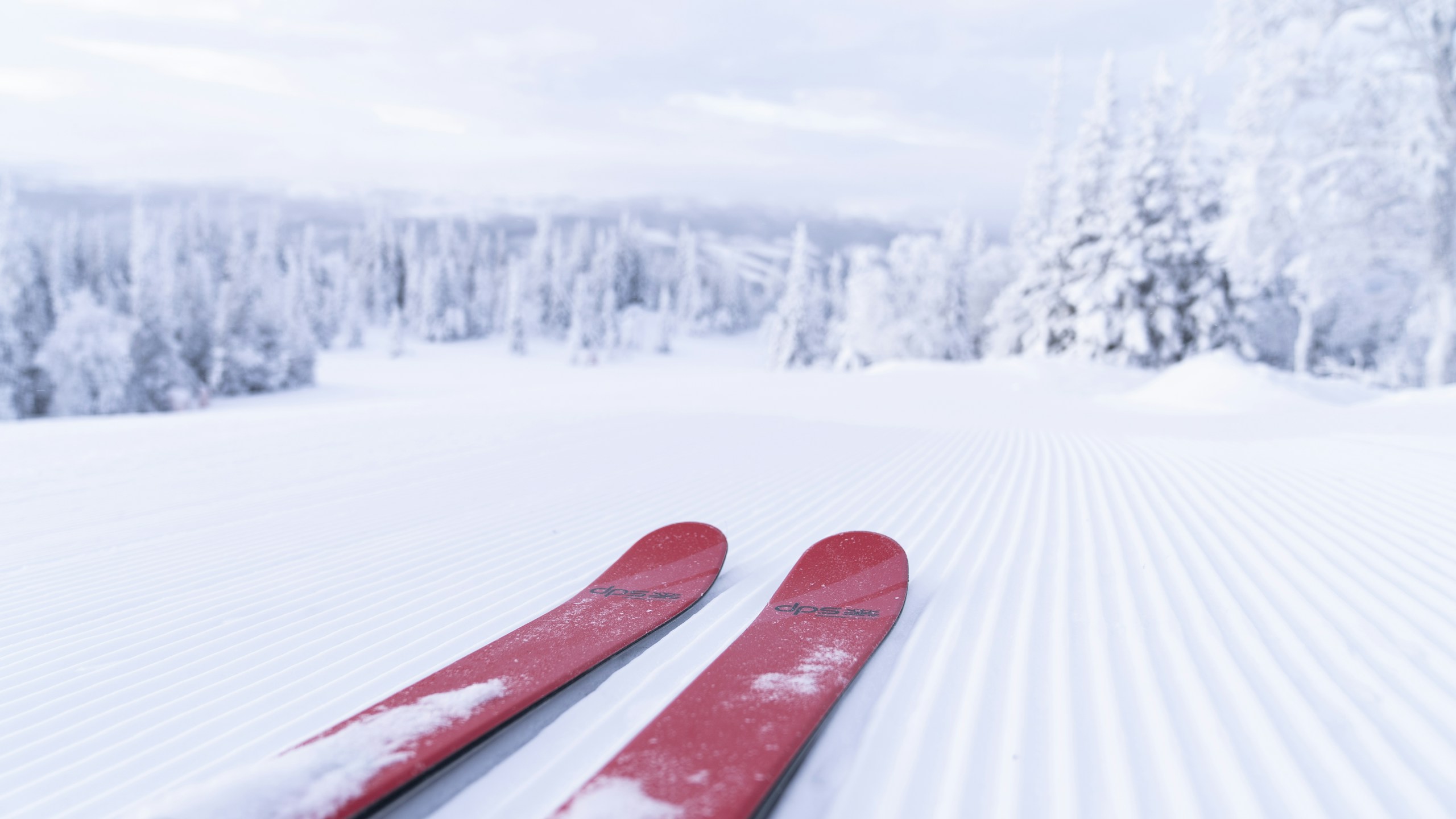
Okay, so I admit it. I like cool skis. I mean, who doesn't?
And although I have a quiver that, for eastern conditions, is slightly exceedingly overkill, I'd find it hard to give up any of them.
Last season, while riding the lift at my local hill in Ontario, I was complimented on my skis. A young lady, who seemed like a relative beginner, had been admiring them and quietly asked what the brand was. As I love talking about my gear, I responded that they were made by a company called J Skis. I sheepishly admitted that it was actually the graphics that initially motivated me to buy these 110mm-waisted planks, which, by the way, I was using on icy Ontario groomers.
Two chairlifts later, I got a similar compliment from a snowboarder who was checking out the tropical motif. So maybe it wasn't just about their on-hill performance.
As we slid off the lift and went our separate ways, it got me thinking about the variety of skis in my quiver and why I constantly feel the need to throw more unnecessary charges on my credit card. It also got me thinking about the ultimate question: what actually makes us buy one ski over another?
The expected answer is performance. Between waist widths, rocker profiles, flex patterns, YouTube reviews, recommendations and endless online research, obviously we buy skis based on how they're going to perform on snow. Well, maybe not.
Because I think there's a lot more that goes into buying a pair of skis than we'd like to admit.
The skis we wanted to be seen on
Let's take K2. Growing up, two of my ski idols skied K2s. If you understand the history of freeskiing, the names Scot Schmidt and Glen Plake will sound familiar. They were the rockstars of skiing, and more than a few suburban kids wanted to ski like them. Me included. And that meant buying K2s. People flocked to the brand because of what it inspired you to be.
Nowadays, for many skiers, K2 is probably as much about nostalgia as it is innovation. I still have a pair of 2011 Obsetheds and a pair of 2013 Hellbents in my quiver, and I have a very hard time imagining getting rid of either. (And if you haven't seen Greg Stump's Blizzard of Aahhh's, do yourself a favour and watch it.)
Sometimes we buy what a brand represents
The same can be said for brands like Black Crows. Born in Chamonix, France, Black Crows built its identity around big mountains, freeriding and ski culture. For me, it was Canadian freeskiing legend Mark Abma who first drew my attention to them. I loved his effortless style and kept seeing those Black Crows bases every time he dropped a cliff. To me, Black Crows symbolized coolness and true ski culture. And I wanted that. Was I comparing torsional stiffness and sidecut dimensions every time I watched Abma ski? Of course not. I wanted the skis.
Then there are skis that just look cool
But not every ski brand has a history built around legends, racers or famous mountains. Some simply aren't afraid to have a little fun. J Skis might be one of the best examples. The graphics are often loud, weird, funny and sometimes completely ridiculous. And I mean that as a compliment. Bob Ross on your skis? Sure! Cats shooting lasers at robots? Why the hell not? Performance and construction obviously still matter. But skiing is supposed to be fun, so why shouldn't our equipment have some personality too? Limited production runs add another element. There's something cool about owning a ski you probably won't see five more pairs of in the lift line.
But what about the brands you've barely heard of?
There are smaller ski companies that don't have the marketing budgets or distribution networks of the major manufacturers. That's pretty much how I discovered Moment. I'd heard the name, but living in Ontario, Moment skis aren't exactly everywhere. I had no nostalgic connection to the brand, but I kept hearing about them. Moment seemed to have developed this almost cult-like following, particularly among western skiers and serious gear nerds, and that intrigued me.
Start digging around ski forums, Reddit threads or YouTube reviews and certain names keep popping up. Moment. ON3P. Prior. Icelantic. Liberty. Brands that might be relatively unknown to the average skier standing in a lift line but certainly aren't unknown to people who obsess about skis. You know, people like me... and probably you.
So I took a chance and I bought a pair of Moment Wildcat 118s. Funny thing is, I haven't even skied them yet. Their first real test should come this December when I take them to Chatter Creek for a couple days of catskiing.
So why did I buy them? Part of it was curiosity. Part of it was reputation. Part of it was the graphics. And part of it was simply wanting to own something different. You're not just buying a ski. You're buying into a smaller community of skiers who probably discovered the brand the same way you did, through recommendations, word of mouth, curiosity and spending far too much time researching skis on the internet.
Of course, there's one rather important catch. The skis still have to deliver. Cool graphics might get you interested. The story behind the company might convince you to take a chance. Exclusivity might even help you pull out your credit card. But eventually you've got to click into them and point them downhill. And that's what I'm looking forward to finding out with my Moments this December.
"Maybe the skis we choose say something about the skier we think we are, or even the skier we'd like to be."
So why do we ski the skis we ski? Maybe our ski-buying decisions aren't nearly as rational as we'd like to think. Obviously, performance matters. A lot. But so do nostalgia, our ski heroes, graphics, brand identity, exclusivity, community and the stories we associate with the companies making them.
And if they happen to look really cool in the lift line? Even better.